
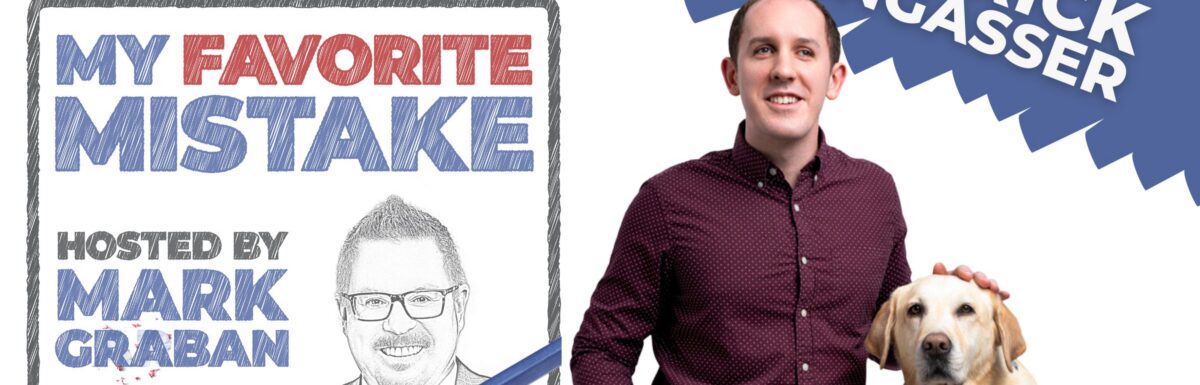
Patrick Engasser spent two years ranked near the bottom of a 615-person sales organization before one decision changed everything: hiring a coach. In this episode, he talks about why waiting so long was his biggest mistake, how he turned blindness into a competitive edge, and what actually separates real leaders from managers with a title.
Listen:
Check out all episodes on the My Favorite Mistake main page.
My guest for Episode #342 of the My Favorite Mistake podcast is Patrick Engasser, bestselling author of If I Can Do It, You Can Do It, business coach, and motivational speaker who has been blind since birth. Patrick built a seven-figure sales team and earned multiple leadership and coaching awards — but none of that came easily, and the story of how it started is the point.
His favorite mistake: spending his first two years in outside sales grinding through trial and error, ranking near the bottom of a 615-person organization, racking up credit card debt, and riding the bus because he couldn't afford a cab — all while not knowing that hiring a coach was even an option. Once he did, his trajectory reversed. Within a year, he went from the low 500s to number one in account sales. He's hired a coach in every major transition since.
The conversation goes well beyond the sales comeback. Patrick talks about the mindset shift that had to happen before any strategy could work — including how he stopped seeing his blindness as a liability and started using it as a genuine advantage. We also get into what real leadership looks like versus management with a title, how to coach people through excuses without damaging the relationship, and why procrastination is usually just avoidance of the one thing that actually matters.
Themes and Questions:
- Why trial and error is the most expensive way to learn — and what to do instead
- How a single book recommendation led Patrick to hire his first coach and reverse a two-year losing streak
- Why mindset always has to come before strategy — and what that looks like in a coaching relationship
- How Patrick reframed blindness from a perceived liability into a real competitive advantage
- The difference between a manager with a title and a leader people actually want to follow
- Why the best leaders take the blame when things go wrong and give the credit when things go right
- How to identify the right coach for your stage — and why the coach who got you here may not be the one to get you there
- What procrastination is really signaling — and how to interrupt it before it costs you two years
- How to coach someone through excuses without losing the relationship
- What to do — and not do — when you encounter a guide dog in public
Scroll down to find:
- Video version of the episode
- How to subscribe
- Quotes
- Full transcript
Find Patrick on social media:
Watch the Episode:
Memorable Moments from the Conversation:
Click on an image for a larger view
Subscribe, Follow, Support, Rate, and Review!
Please follow, rate, and review via Apple Podcasts, Podchaser, or your favorite app—that helps others find this content, and you'll be sure to get future episodes as they are released.
Don't miss an episode! You can sign up to receive new episodes via email.
This podcast is part of the Lean Communicators network.

Other Ways to Subscribe or Follow — Apps & Email
My Favorite Mistake, Episode #342: Patrick Engasser
Introduction
Mark Graban: Hi, welcome to My Favorite Mistake. I'm your host, Mark Graban. Today's guest is Patrick Engasser. He is the bestselling author of the book “If I Can Do It, You Can Do It.” He is a business coach and motivational speaker. Patrick began his career as a top sales rep at a Fortune 500 company. He then went on to build and lead a seven-figure sales team and earned multiple awards for leadership and coaching excellence. Blind since birth, Patrick brings a powerful perspective on overcoming adversity, breaking through mental barriers, and turning perceived limitations into real leverage for growth and leadership.
So Patrick, thanks for being here on the podcast. How are you?
Patrick Engasser: I'm great, Mark. Thanks for having me. I appreciate it.
Mark Graban: It's great to talk with you today. There's a connection here — your book is endorsed heartily by Kevin Harrington, formerly of Shark Tank. He was the guest here on episode one. I don't think we'd have a podcast without Kevin Harrington.
Patrick Engasser: I love Kevin. He's awesome. He's been great. Super helpful.
Mark Graban: How did you get to know Kevin?
Patrick Engasser: I met Kevin through my current business coach, James, who I've known for five or six years, at a mastermind event. The two of us did some work together through some of his masterminds. He was gracious enough to endorse the book and my work, and I really appreciate all he's done. He's a great mentor with tons of sales knowledge and experience, so it's always great to learn from him when I can.
Mark Graban: He was here talking about a book on mentorship, so I'm happy to hear that he is, of course, a great mentor.
Patrick Engasser: Absolutely.
Patrick's Favorite Mistake: Not Hiring a Coach Sooner
Mark Graban: Before we talk about the book and the lessons you've learned along the way, the key question is — Patrick, what's your favorite mistake?
Patrick Engasser: I've been thinking about this for the last day or two. I have a couple of them, but my favorite one connects to what you mentioned about my sales career. I had some success in sales, but that's not how the story started. The first two years I was a complete failure in sales — ranking near the bottom of the organization.
I was in the insurance industry, representing a large Fortune 200 company, and I had no idea how to sell anything at the time. Prior to that, I'd done some work in call center customer service and then debt collection, which was the one thing I've done for money that I really didn't enjoy at all. That was actually good, because it forced me to look for something completely opposite.
When I entered the sales arena, the position I took was an outside sales role, but also a self-employed position — a 1099 opportunity. No base, straight commission plus bonus. Because of that, it was kind of like becoming a business owner and a sales amateur, because I wasn't a professional at the time.
Mark Graban: Once you get paid, I guess that makes you a professional.
Patrick Engasser: That's right. But that took some time. I struggled a lot early on. The first two years were not much fun. I learned a lot, but in terms of the financial side, I was deeply in debt. I racked up credit card debt, my student loans were in deferment, and I was taking the bus everywhere because I couldn't afford a cab. Being blind since birth, I still can't drive — autonomous cars can't come fast enough — but back then I couldn't even afford a cab.
Had I been smarter, I would have done what I eventually did about two and a half years in — toward the back end of my second full year in the business. I hired a business and sales coach. It took a little bit of time after that, but I can trace back to that moment when my career started to change.
It's like being a brand new fisherman going to one of the best fishing spots in the world, thinking you've got to be able to catch fish here, but having absolutely no idea what you're doing — and deciding not to hire a guide. That was me in the business world. Once I hired someone who was an expert in the field I was trying to conquer, things changed pretty much overnight.
I went from around 600th place — there were about 615 reps in the organization — ranking in the 500s consistently for the first two years. That third full year, I went from the low 500s to the high 400s to number one in account sales.
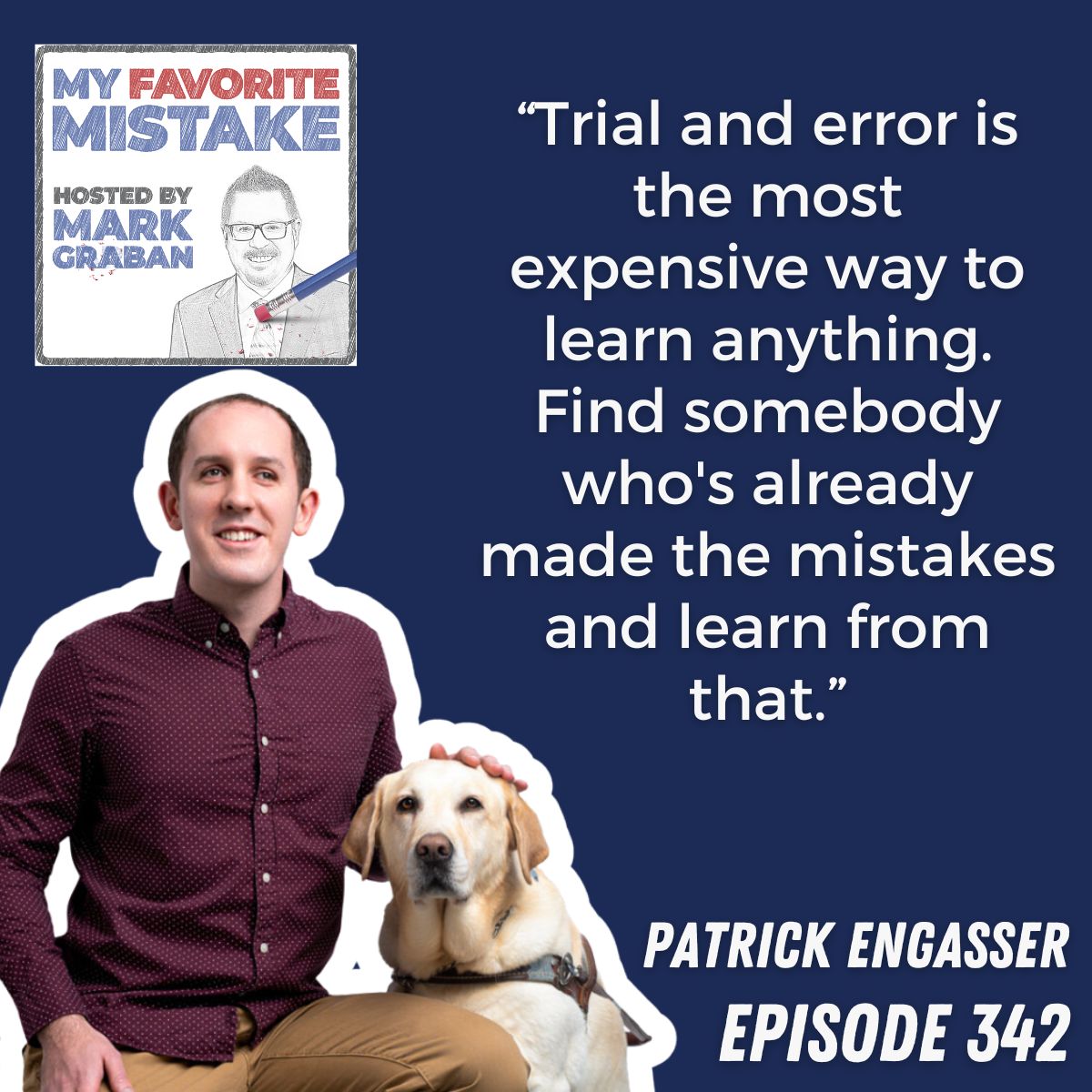
A huge part of that, if not most of it, was being mentored by someone who could give me the shortcuts. Rather than trial and error — which is the most expensive way to learn anything — he could tell me about the mistakes he'd already made and why I shouldn't repeat them. If I had a chance to do it over, even when I didn't have the money, I would have hired that coach on day one. I just didn't know that was a thing. Every new major leap I've made since — getting into sales leadership, starting my speaking and coaching business — I've hired an expert, a coach, a consultant, someone who could be that GPS and lead me to success faster rather than figuring everything out through trial and error.
Mark Graban: I like the way you've summarized that, Patrick. We're going to make mistakes, so let's learn from them — but that can't be the only way we learn. That might take our entire career, as opposed to having a coach who helps you know what to do now.
You mentioned this was a commission-only, 1099 job. It seems like the company would have had an interest in providing better training — something mutually beneficial — rather than a sink-or-swim approach where they keep the ones who figure it out and let the rest leave.
Patrick Engasser: I'm tremendously grateful for the opportunity they gave me, because that's what launched me into a successful career in sales and ultimately where I am now as a coach and entrepreneur. That said, there could have been more training. They did have a system — a three-day sales school — and I learned from that. But I had no background in sales or business, so a lot of it was in-the-field training.
Being blind, I also had challenges other people didn't have. So there was a learning curve not just around the process, but around how to take that process and make it work for me. My trainers had a tough time walking me through that, and some of it was going to be a journey I had to figure out on my own.
The big lesson for anybody listening is to take ownership. Early on I was flailing around, expecting someone to jump in and help me. They were willing to give me tips, but I needed more than tips. I eventually learned that from reading “The Success Principles” by Jack Canfield, where he talks about everybody needing a coach. I hadn't known I could hire a business or sales coach.
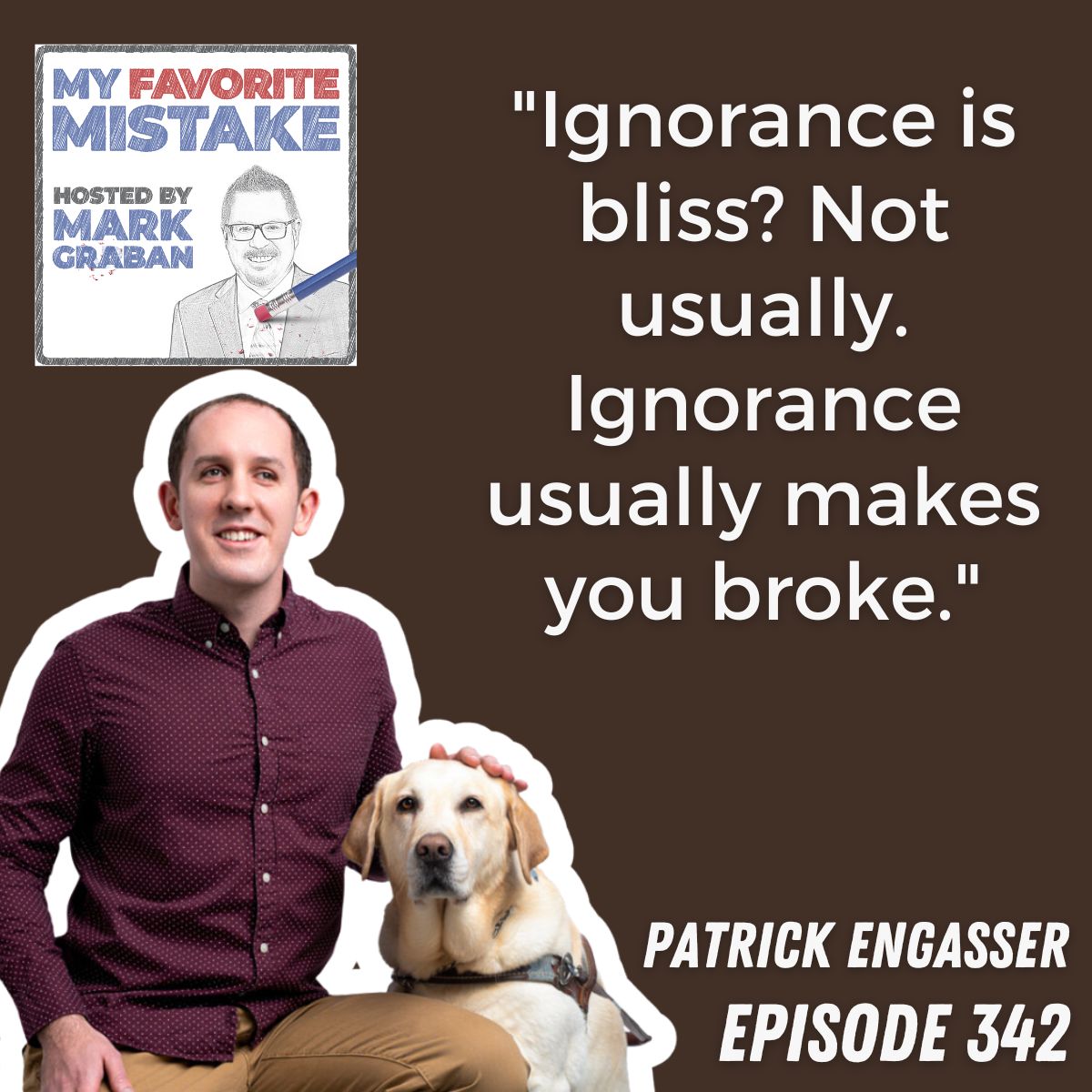
People say ignorance is bliss. Not usually. Ignorance usually makes you broke.
I needed to take a hundred percent responsibility and say, this is on me. I'm either going to succeed or fail based on my willingness to invest in myself and learn what I need to learn to be successful. That was the equalizer. It didn't matter that I had challenges other people didn't have. I was willing to overcome them through hard work and investing in my business.
Finding the Right Coach
Mark Graban: Where did the idea of hiring a coach come from? Was it a colleague who had done that?
Patrick Engasser: No, I read it in “The Success Principles” by Jack Canfield. It was actually a gift from my parents the previous Christmas — they said, you seem serious about this sales thing, here's a book on success. I took a while to get through it, but eventually got to the tip that made the biggest impact: hire somebody who is where you want to be, who can walk you through the process and has already made the mistakes you can learn from.
I went online and typed in “business coach” — not really knowing what I was looking for — and found a site with profiles of business coaches. I drilled down, interviewed four or five different people, and found the one that was the best fit at the time. I was with that coach for three years, and it totally transformed my sales career. I've had a coach in some capacity ever since — sometimes more than one at a time.
Mark Graban: Even top athletes — top golfers, top tennis players — still have individual coaches. Nobody really graduates beyond benefiting from one.
Patrick Engasser: If you want to be a professional and rise to the level of being a top ten percenter, you really need someone. Either it's going to take a long time of trial and error, or you can find someone who can save you time, energy, money, and stress by accelerating that process. The top singers have voice coaches. Olympic athletes have at least one coach, if not multiple. Same for professional athletes and musicians.
If it's a hobby and you just want to go hit some golf balls for fun, maybe you don't need a coach. But if you're pursuing something at a higher level and want to be one of the best in your industry, you'd be hurting yourself by not bringing on someone who can be that expert consultant.
Mark Graban: You mentioned the process of interviewing coaches and thinking about fit. Someone who is great at coaching a beginner might not be the best fit for an elite performer trying to get to the next level, and vice versa. What are your thoughts on finding the right fit?
Patrick Engasser: It depends on the situation. If you're looking for someone to take you from zero to professional level, not every coach will be a good fit for that. And if you're looking to go from near-elite to truly elite, you're going to want someone who has coached top performers in your field.
That's not always the same coach across stages. The first coach I worked with was great for me at the time, but when he moved to a different time zone it made less sense for us to continue, and I'm not sure he would have been the right fit for the business I'm in now.
Part of it is also finding someone who coaches in a way that works for you. Some people want someone in their face who will hold them accountable. Others just need help with strategy. I ask my clients up front: when we hit a wall — and we will — how do you want me to handle that? Do you want me to push you, or do you want encouragement? Some people, if you push them too hard, they'll fall apart. Others, if you don't push them, are like, why am I paying you?
As you work with more people over time, you get better at reading what someone needs in a given moment.
Mindset Before Strategy
Mark Graban: One thing that strikes me about your story is that a lot of people might have given up in those first two years. You really seem to demonstrate a growth mindset — the belief that you could get better at sales and become one of the best.
Patrick Engasser: That's interesting because most people who come to me for a strategy session think that's what we're going to work on. And yes, we'll get to strategy — but it always starts with mindset. If you don't have the belief that change is possible, I can give you all the strategy in the world and it won't matter.
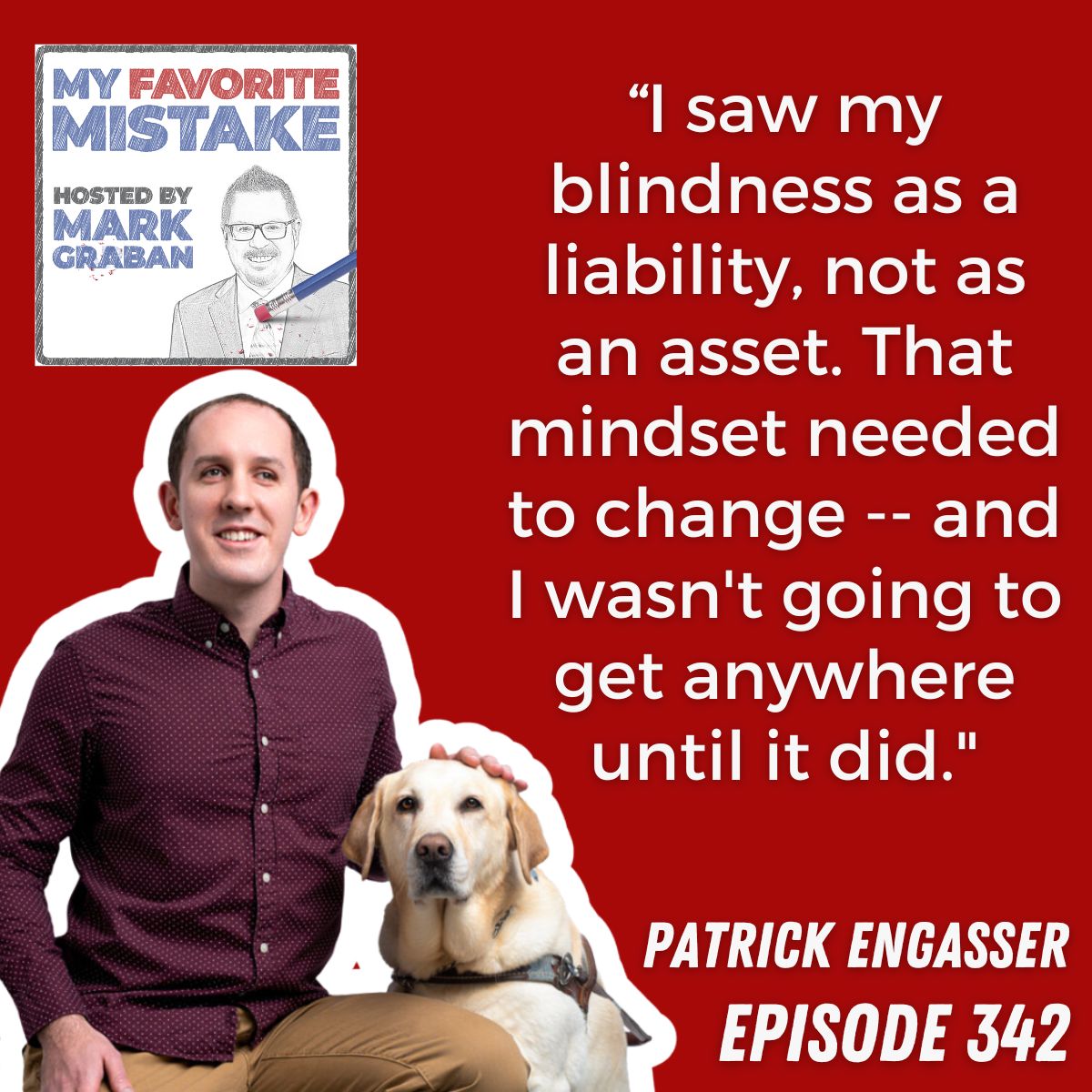
Early on, I saw my blindness as a liability, not as an asset. That mindset had to change. I had to stop thinking of it as a burden I couldn't overcome and start asking how I could use it to my advantage. When I walk in with a guide dog, I have a story. People give me thirty seconds to have a conversation where they might have shown someone else the door before hello. That was an advantage — but I had to flip the paradigm to see it that way.
Mindset alone isn't enough, though. You need to put strategy and technique alongside it. If you have one without the other, you're going to have a tough time achieving sustainable growth. But mindset comes first.
I knew a lot of people who came into the same business at the same time with twenty years of sales experience. They had way more talent and experience than I had. But they hadn't been in outside sales where if they don't close, they don't eat. They were used to base plus commission, or salary plus bonus. This was a different world. They had more talent, but they didn't have the same strong why. I was going to make this work because I did not want to go back to a call center job for the rest of my life.
Guide Dogs: What People Get Wrong
Mark Graban: Before we dig into the book, there's a topic that's important to me. You mentioned having a guide dog — there's a beautiful photo of you and your dog on the cover. My late aunt Cheryl had different guide dogs over the last forty years or so of her life and accomplished a great deal academically, professionally, and with her family. When I was a kid and first met her first guide dog, there were mistakes I had to learn not to make. What are some of the mistakes the general public makes when they see a guide dog?
Patrick Engasser: I've had three guide dogs over my life since I was eighteen. Two yellow labs — one of which is on the book cover, that was Elvis — and my current dog, Indie, who is a black lab I've had for about a year.
The biggest thing is to ask. If you want to approach or pet the dog, ask first. The rule of thumb is: when the dog is working and has a harness on, you shouldn't pet, make eye contact, or talk to the dog. I'm probably more lenient than most — the school would likely disagree — but if my dog is not actively working and someone politely asks, I'll usually take the harness off so he knows he's off duty and let them say hello.
The one time I was probably as firm as I've ever been was when a gentleman walked up and started petting my dog as I was about to step off a curb to cross six lanes of traffic in an area I didn't know well. I wasn't nasty, but I told him this was not a good time. I get that people love dogs, but the dog has a job to do.
Most people know enough to at least ask. The main thing is: if you can see the dog is actively leading someone, that is not the time to make eye contact, talk to the dog, or walk up and pet it.
Every dog is a little different, too. My first dog, Rupert, was so focused on work that if you tried to pet him he'd give you a look and keep going. Indie, my current one — you can make eye contact with him from across the room and his tail starts going. So you have to read the situation, and every handler is a little different in what they're comfortable with. But if they're actively working, do your best to ignore them. I know it's hard. They're cute.
Mark Graban: That harness and handle is a pretty clear visual signal. And these dogs have an immense level of training — they know when the harness is on, it's not time to roll over for belly rubs.
Patrick Engasser: Usually. My current one might still roll over if you got to him before I noticed. That's why I always pop the harness off if I'm going to let someone pet him — to keep that clear line between work and play.
Mark Graban: We see more service dogs now for all sorts of support, and hopefully people have gotten the message. But I do see people in airports sometimes lose their minds when they see a cute dog. I like your advice of at least ask — you don't have to pretend the dog isn't there.
Patrick Engasser: My favorite thing is when kids correct their parents. You've got a five-year-old walking by, the parent reaches for the dog, and the kid says, “Daddy, you can't pet that, that's a service dog.” I have no idea where the kid learned that — clearly not from the parent — but wisdom from a five-year-old. That always gets me.
Mark Graban: It could have been Sesame Street. They've had a lot of inclusive characters over the years.
Patrick Engasser: My three-year-old son watches Clifford the Big Red Dog and there's an episode that mentions a guide dog. He was excited because he said, “Phoebe is like Indie — she's a working dog for someone who can't see, like Daddy.” That kind of education early on is valuable. The sooner kids learn, the better.
The Book: Eliminating Excuses and Taking Ownership
Mark Graban: Let's talk more about the book and the idea of eliminating excuses. Is that easier said than done? How do you coach somebody through it?
Patrick Engasser: It is easier said than done for most of us, because we don't want to admit that what's holding us back is an obstacle in our own mind. Sometimes you have to ask directly: is that a valid reason, or is that an excuse? I probably wouldn't do that in a first coaching consultation, but the question matters.
I always start with a hundred percent responsibility, because you're not going to change anyone else. You can only change yourself. Sometimes people have legitimate grievances — someone really did do something harmful to you. But I've yet to see pointing fingers at other people or situations produce an effective result. You can't control what happened; you can only control how you respond to it.
The problem with excuses is they don't pay well. Taking ownership is the only rock-solid foundation I've found for someone to reset and move from where they are to where they want to go.
Mark Graban: You used the word “reasons” versus “excuses” — an important distinction. A reason might be “I can't operate a standard off-the-shelf computer.” But that doesn't have to be the end of the story. Can you share more about that — even when it comes to navigating technology?
Patrick Engasser: There's actually a story in the book about exactly this. When I started in the insurance industry, the software they used for electronic enrollments wasn't compatible with the screen reader I use. The screen reader reads what's on the screen when I type something, open an email, go to a website — I use different keystrokes to navigate it.
The enrollment software didn't interface well with my screen reader. We tried to make it more compatible — I sent it to someone I knew and asked for help — and it got a little better, but not much. The company was a multi-billion dollar organization. They weren't going to overhaul their entire enrollment software for one blind rep who might not make it. I understood that.
So I had a choice: make an excuse, or find a creative solution. I brailed out all the applications and memorized the screens. Some parts the screen reader could read; other parts I had to count tabs to know how many boxes or pages I needed to navigate to reach the next section. At first it was extremely slow. But after a couple of months of practicing every day, I got so good at it that we had a little time competition in the office and I dared anyone to beat me. I could tab through the screens faster than anybody else because I didn't have to look to find the next field.
Once again, my blindness became an asset. But I had to choose not to use it as an excuse.
As a coach, one of my best assets is that I've had to solve simple problems that for most people aren't problems at all — how to brush my teeth, how to tie my shoes. Finding different solutions to everyday problems has been a daily practice since I was very young. When someone brings me a business problem, creative problem-solving is a skill I've built in the trenches. I think that's one of the things that separates me from coaches who haven't had to do that.
Leadership: What Makes People Want to Follow You
Mark Graban: You write about leadership in the book — and specifically about being a leader people want to follow, which is a different dynamic from someone having authority over you. How do you describe leaders that people genuinely choose to follow?
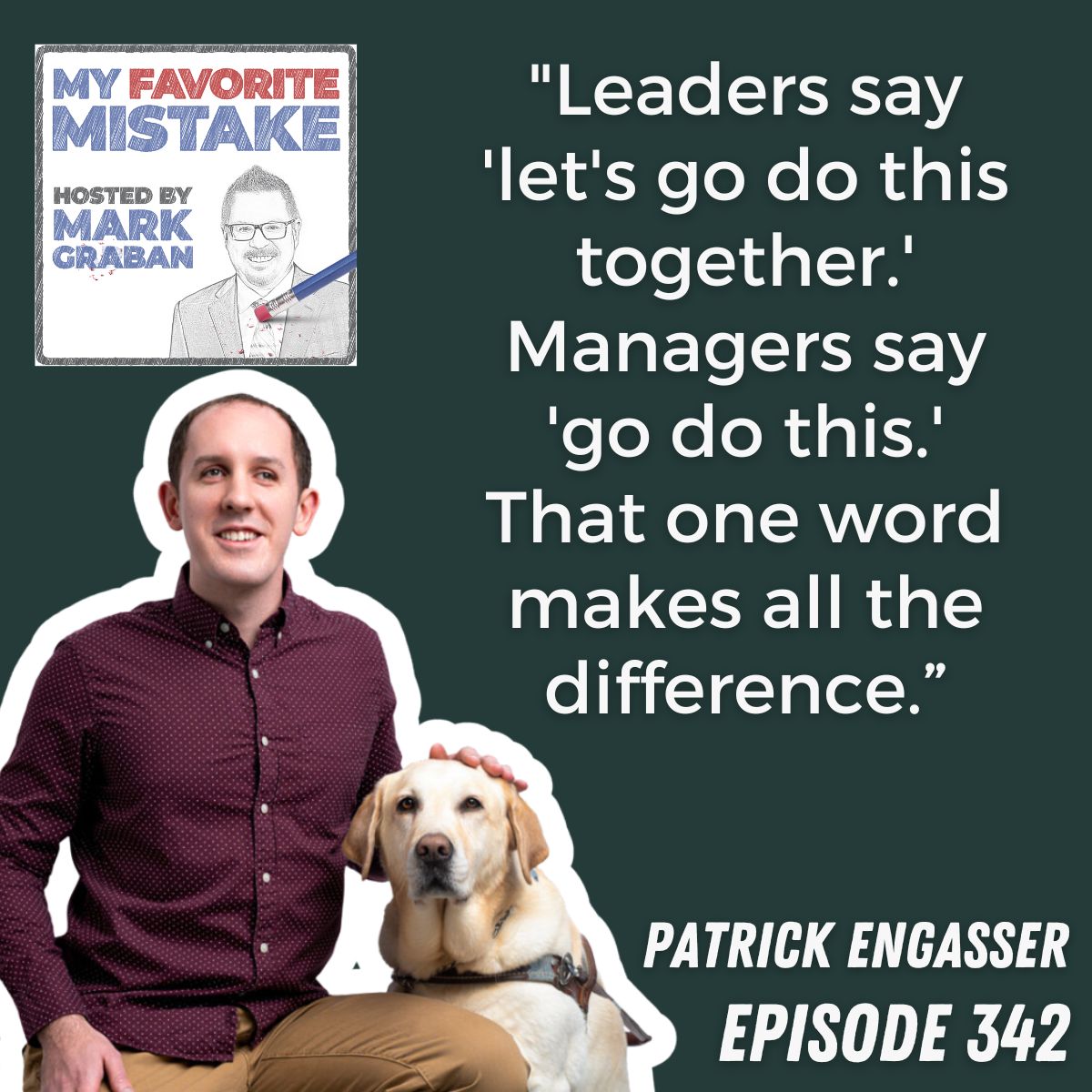
Patrick Engasser: Most people are managers. Very few are leaders. Having a title — district manager, regional manager, whatever it is — doesn't make you a leader. Very few people genuinely inspire, empower, and motivate others to want to follow them. The difference is one word: leaders say “let's go do this together” rather than “go do this.”
Leaders are in the trenches. They're not asking you to do anything they haven't done and wouldn't still do. When people are around someone like that, they want to run through a wall for them. That person has real influence — not because of a title, but because of how they show up.
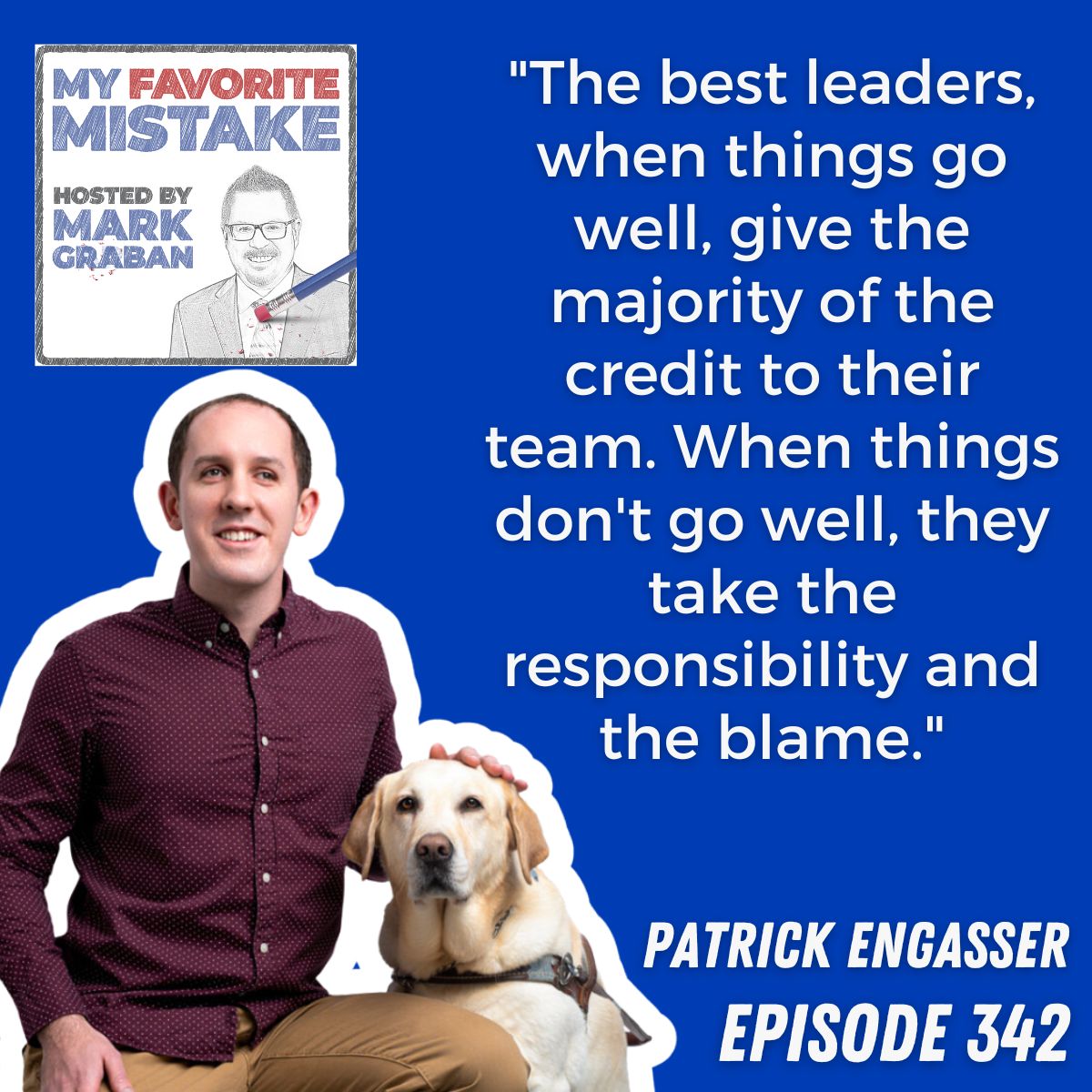
The best leaders I've ever worked with, and there are only a handful, are people who when things go well give most of the credit to their team, and when things don't go well take the responsibility and the blame. It doesn't always feel fair. Sometimes something genuinely isn't your fault. But you protect your team. You have their back. And when you do that, your people will go to extreme lengths for you. They will give you more when you ask for more, because you're not throwing them under the bus when things go wrong and grabbing all the credit when things go right.
Mark Graban: I think of a former football coach at my alma mater, Northwestern University — Pat Fitzgerald. He had a lot of great leadership traits in his earlier years. But in later years, after losses, I would cringe hearing things like “we had a great game plan, the players just need to execute better.” Especially when that's being said on television, and you think about recruits and athletes who have choices about where to play. That kind of comment says something.
Patrick Engasser: I'm a Bills fan, from Buffalo — we've had many bad quarterbacks over the years. Josh Allen is the best we've ever had. What I love about him is that when things don't go well, it is always his fault in his telling of it. He never points at anybody else. And when things go well, he lifts everyone around him. He could get sacked ten times and in his mind there was never a protection problem — he just didn't get rid of the ball fast enough.
Who doesn't want to play for that guy? Who doesn't want to be on that team? That is the difference between great leaders and managers with a title.
Mark Graban: And the quarterback role is interesting — they're a player, not officially a coach or manager, but they can be a leader through their words and actions, or not. Some quarterbacks throw tantrums when a receiver drops a pass or runs the wrong route. That shows too.
Patrick Engasser: A hundred percent.
Mental Blocks and the Procrastination Problem
Mark Graban: One more question, Patrick. When it comes to performance and mental blocks — what's the most common thing that keeps people from becoming top performers, something that's in their control and they can change?
Patrick Engasser: Procrastination is a big one. People procrastinate for a lot of different reasons, but usually it's avoidance of the thing they know they need to do — the hard thing. Most of the time when people hire me, I'm telling them things they already have a sense of. It's about putting it in a different perspective, painting a picture of where they want to be in six months or a year, and making the stakes real: what does life look like if you start doing this consistently? What does it look like if you don't?
One of my favorite quotes — I'll probably paraphrase it — is from Les Brown: “If you do what's easy, life is hard. But if you do what's hard, life becomes easy.” It doesn't become easy on day one.
I tell my three-year-old when he says he can't do something: “You can do hard things.” Even when I eventually help him, I'll always say it first. If you're willing to do the hard thing first, the thing that actually moves the needle, that's what separates top performers. We all want to open email at 7:30 in the morning. But we know we should be picking up the phone and making that difficult call, asking for the referral, having the hard conversation. We know it. We just avoid it.
I had a client just yesterday — great guy, owns a successful business, looking to start another one. He needed to free up some time and had been putting off one specific thing for two years. I asked him when we were going to get it done. He texted me later that day — he'd already talked to the two people he needed to, had calls scheduled to move the system over. Two years of delay, resolved in one day.
All I did was have a conversation about it and ask: is this something that should be first on your calendar? Accountability is a powerful thing. We are all people-pleasers to some extent. Find someone — a coach, a mentor, an accountability partner — who will help you do the hard things you know are going to move the ball forward.
Closing
Mark Graban: Very well said. We'll end on that note. Our guest today is Patrick Engasser. His book is “If I Can Do It, You Can Do It: Inspiration for Eliminating Excuses, Overcoming Challenges, and Succeeding in Business and in Life.” Check the show notes for links to the book and Patrick's website to learn more about his coaching work. Patrick, I really appreciated the conversation and thank you for sharing your experiences and insights.
Patrick Engasser: Thanks, Mark. Great conversation. Thanks for having me on.
Mark Graban: Of course. Thanks.