
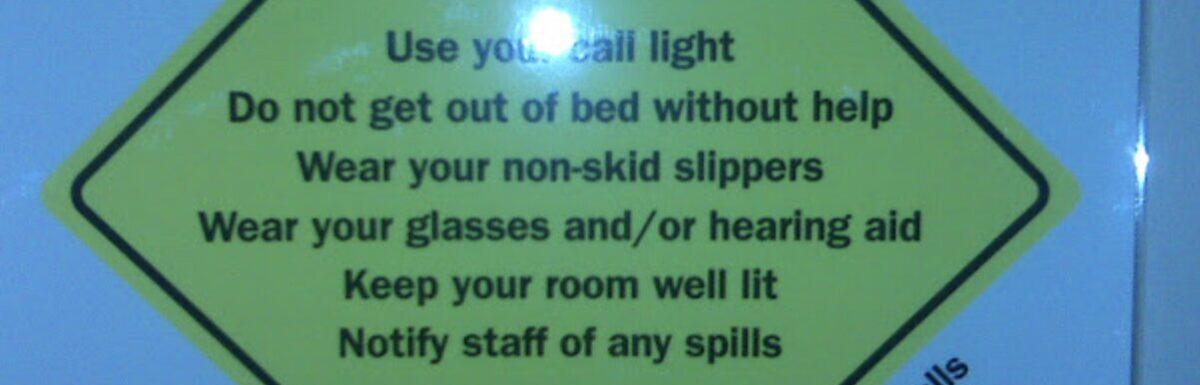
A friend sent this from a hospital. Too bad the sign was located so far from the patient bed that you couldn't read the warning (see the second picture).
If you follow the “Use your call light” instruction, let's hope the nurses and techs can respond… or really it should be said that we hope the processes and systems ALLOW the nurses to have the time to respond.

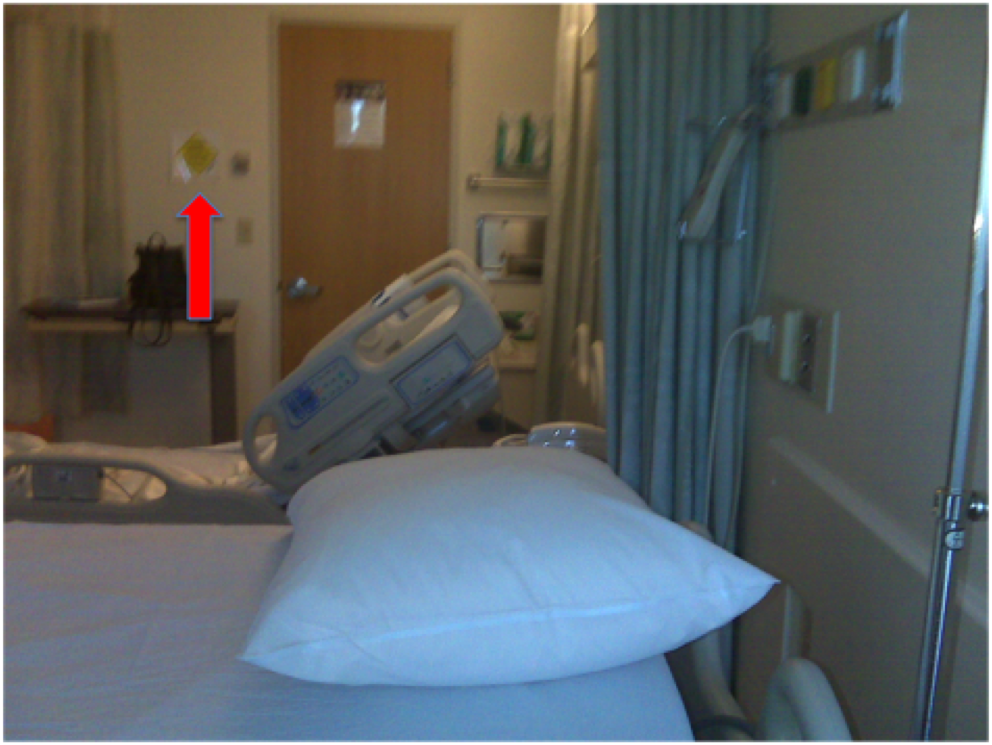
A sign the patient can't read
Look at where the sign is mounted in the second photo: on the wall near the door, across the room from the bed. The patient it's written for is in the bed. One of the instructions is to wear your glasses. A patient who needs glasses to read the sign has to get up to read it, which is exactly what the sign says not to do.
I doubt anyone set out to make it unreadable. Signs tend to go wherever there's open wall space. Nobody checked it from the bed.
Falls are a system problem
A caution sign makes the patient responsible for preventing their own fall. Some of that is reasonable. But the patients most likely to fall are often the ones least able to follow written instructions: confused, medicated, or in a hurry to get to the bathroom.
The sign also says “We are partners in care for your safety.” Partnership goes both ways. If a patient presses the call light, does help arrive soon enough that waiting feels reasonable? If not, patients learn to get up on their own. That's not a reading problem.
Better questions than “where should the sign go?” might be:
- How long does it take to answer a call light on this unit, by shift?
- Which patients are getting up alone, and why?
- What would make it easy for staff to check in before a patient decides to get up?